
By Jody Tuso-Key
Photo Credit: Casey Gardner Ford

Synchronicity Theatre is currently presenting IN SPITE OF MY AMBIVALENCE, a new drama that dives headfirst into the complexities of therapy, mental illness, and the often-messy process of self-discovery. Written with obvious compassion for its subject matter, the play tackles important conversations about mental health and the ways we navigate our relationships with ourselves and others.
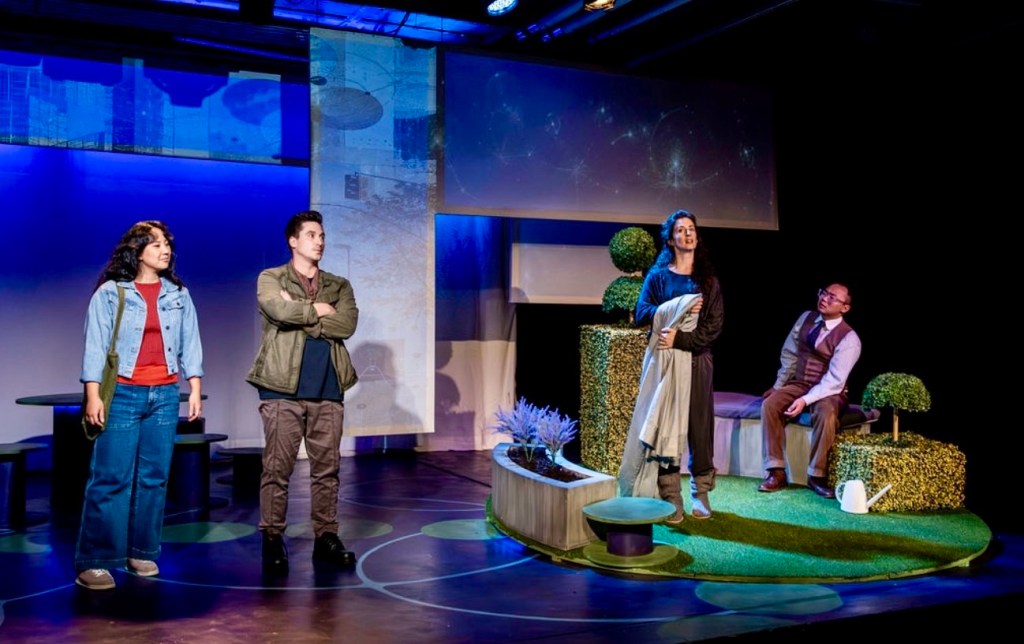
This world premiere, playing through June 28, is a thoughtful, deeply human exploration of trauma, healing, and the invisible threads that connect us all. Written by 2025 Venturous Theater Fund finalist Catherine Yu, the play follows five interconnected souls: a former dancer wrapped in a bedsheet cocoon, a therapist with the patience of a saint (and probably the world’s most exhausted notepad), a clinical researcher searching for answers, a survivor confronting buried trauma, and a refugee carrying the weight of war. Their lives intersect through therapy sessions, relationships, and shared struggles, creating a tapestry of heartbreak, hope, and hard-won resilience.
This is not a play that offers quick fixes, inspirational refrigerator magnets, or a magical breakthrough delivered just before intermission. Instead, Yu reminds us in this one act delight that healing is messy, nonlinear, and often arrives in frustratingly small increments. Equal parts poetic and poignant, IN SPITE OF MY AMBIVALENCE asks audiences to sit with discomfort, embrace uncertainty, and recognize that sometimes simply getting out of bed—or out of a bedsheet cocoon—is its own act of courage.
Yu brings a unique perspective to the material through her work as a university lecturer and GED tutor for federal prison inmates, lending the play an unmistakable sense of empathy and curiosity about the human condition. The result is a work that creates space for meaningful conversations about subjects often left unspoken. Synchronicity Theatre continues its admirable commitment to championing new voices and developing works that challenge audiences to engage with the world—and themselves—in deeper ways.
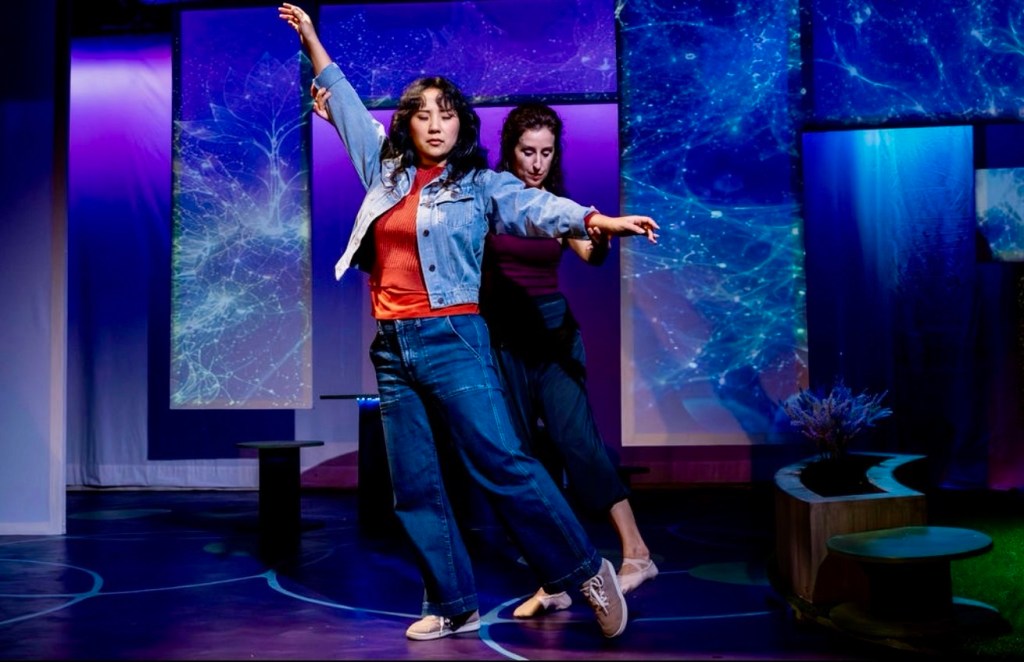
Perhaps the play’s most compelling idea is found in Director Lauren Morris’s program notes, which reflect on a fascinating common thread emerging across disciplines as varied as quantum physics, psychology, and Buddhism: connection. Morris notes that physicists still grapple with a universe where particles remain undefined until observed. Meanwhile, Buddhist teachings speak of interdependent co-arising—the idea that nothing exists entirely on its own.
Yu applies this philosophy to trauma and healing, recognizing that each person’s suffering is uniquely their own, yet our lives continually intersect in ways that shape who we become. IN SPITE OF MY AMBIVALENCE serves as a theatrical embodiment of that idea. Its characters move through separate struggles and private pain, occasionally colliding with one another in encounters that are joyful, painful, transformative, and deeply human. Like particles finding orbit—or people awkwardly finding one another in a therapist’s waiting room—they leave lasting impressions on each other’s lives.
The play also reminds us that theatre itself is an act of connection. Rehearsal becomes theatre only when an audience arrives to witness it. In that spirit, IN SPITE OF MY AMBIVALENCE is less concerned with providing definitive answers than with creating a shared space for reflection. The characters may be isolated by grief, trauma, illness, or memory, but their stories continually reach outward toward one another—and toward us.
The production is grounded by committed performances from its cast, who approach the material with sincerity and emotional honesty. Morris and company guide the audience through a series of therapy sessions, memories, and personal revelations designed to illuminate the characters’ complex inner lives. The subject matter is undeniably relevant, particularly at a time when conversations surrounding mental health have become both more open and more necessary than ever.
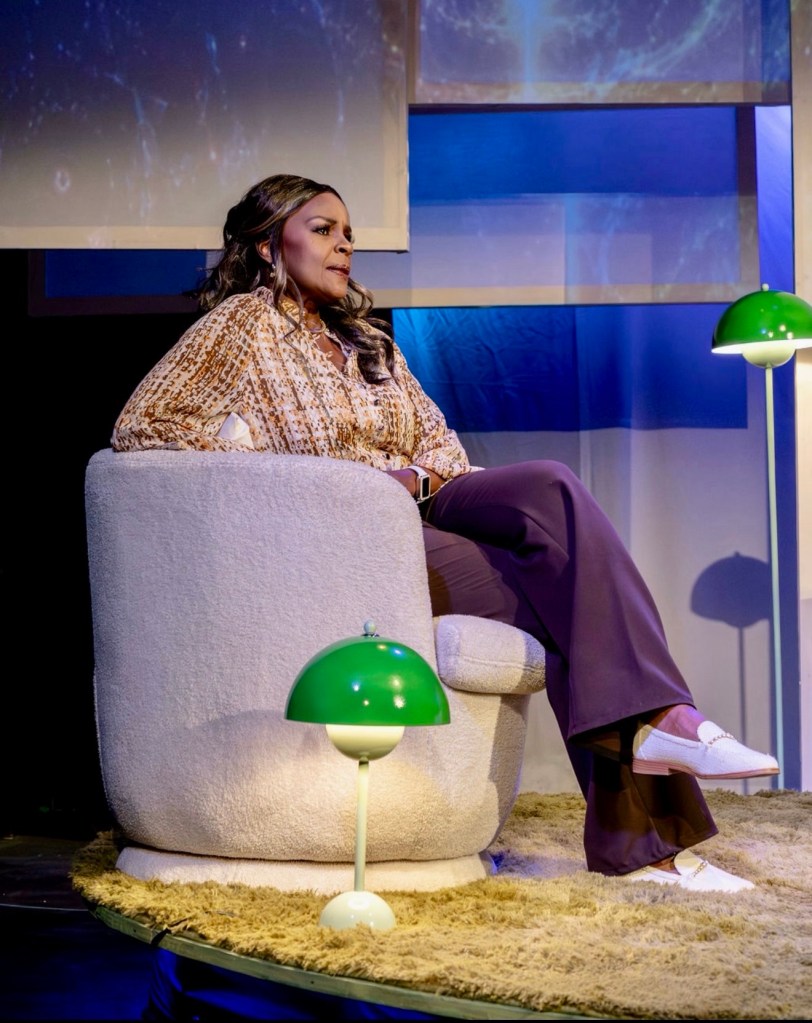
Terry Henry – THERAPIST
As the therapist trying to guide these fractured souls toward healing, Terry Henry delivers a performance grounded in compassion, patience, and quiet strength. In a play filled with people wrestling their own personal demons, Henry becomes the steady hand on the tiller, navigating turbulent emotional waters without ever forcing the journey. This therapist is neither a miracle worker nor a dispenser of easy answers. Instead, Henry portrays an empathetic and wise woman who understands that healing often comes in frustratingly small increments and that sometimes the most powerful thing one person can offer another is simply presence.
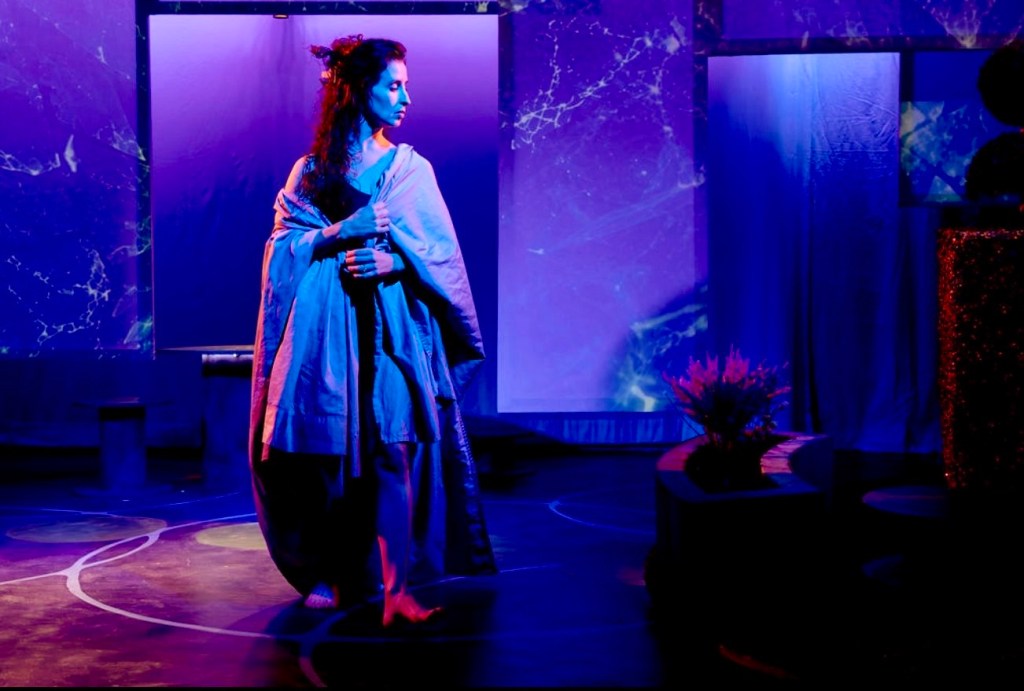
Amelia Fischer – ANN
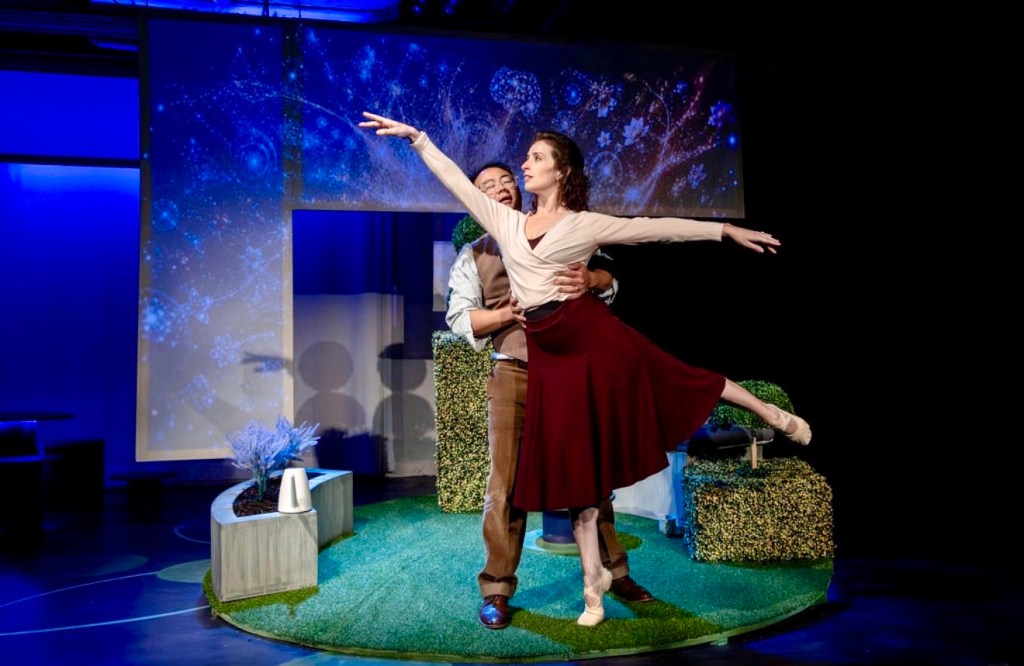
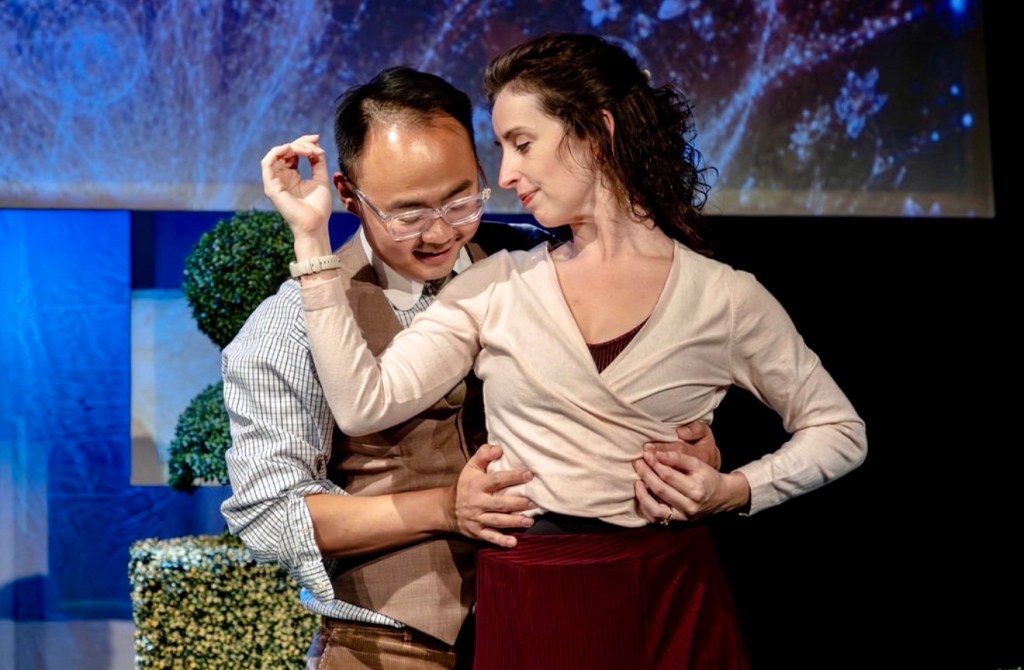
Amelia Fischer delivers a deeply sensitive performance as Ann, a former ballerina grappling with vertigo, grief, and a growing sense of isolation. Seeking comfort in gardening and a bedsheet she affectionately calls her cocoon, Ann longs for connection while struggling to make herself understood. Fisher, recently seen in Synchronicity’s acclaimed Rocket Men, navigates Ann’s emotional journey with grace and authenticity, moving seamlessly between moments of joy, vulnerability, and despair.
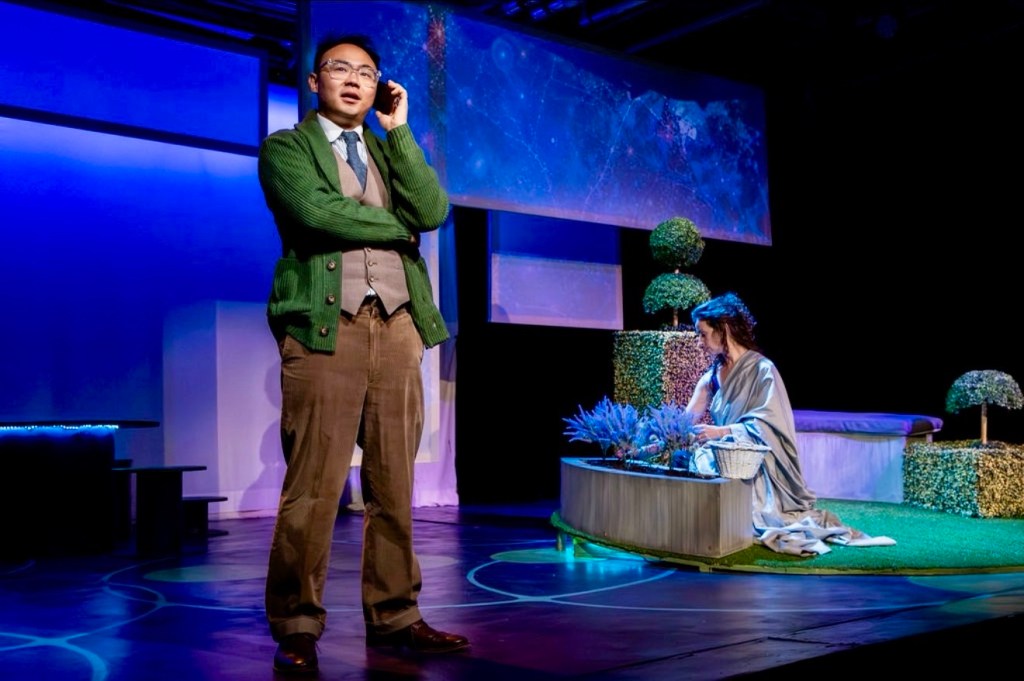
Terence Lee – SUNAN
Terence Lee makes a strong Synchronicity debut as Sunan, Ann’s husband and a clinical researcher whose scientific objectivity often conflicts with his role as a loving spouse. Lee skillfully balances Sunan’s frustration, concern, and emotional blind spots, creating a character whose actions are often misguided but never malicious. His performance brings welcome tenderness to a role that could easily have become far less sympathetic.
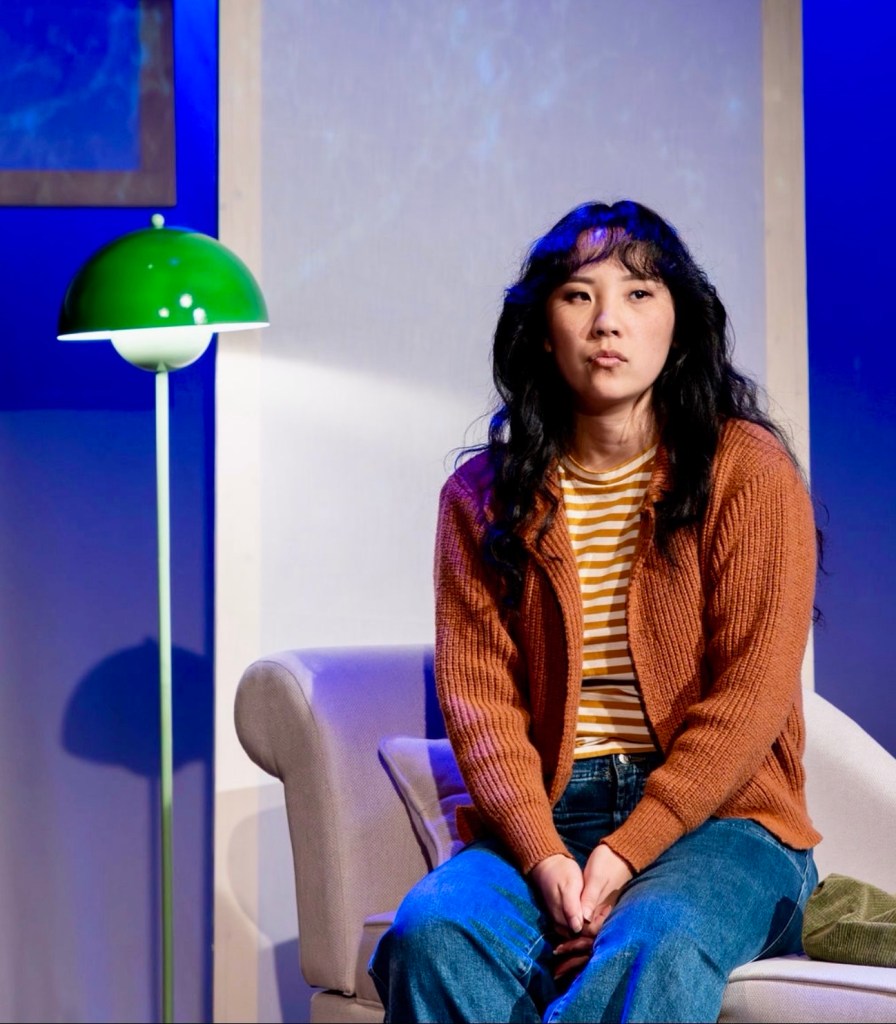
Michelle Pokopac – LILA
Michelle Pokopac shines as Lila, a young woman confronting long-buried childhood trauma that has resurfaced in adulthood. As the character who connects many of the play’s relationships and storylines, Lila serves as an emotional anchor for the production. Pokopac approaches the role with honesty and restraint, creating a believable portrait of someone struggling to reconcile the past while searching for a path forward.
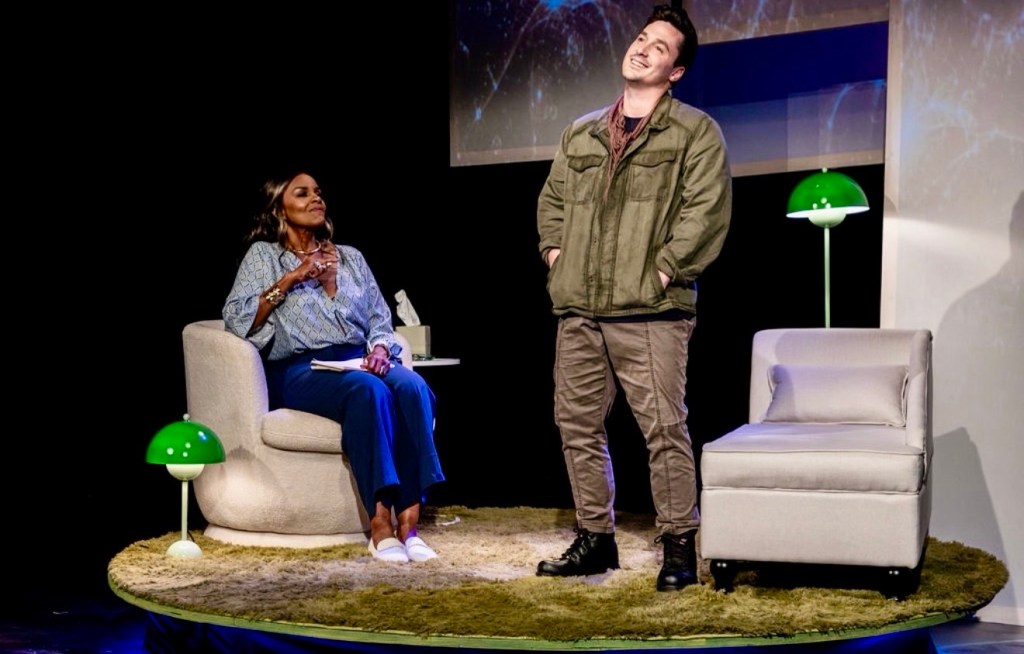
Patrick Wade – TOMAS
Patrick Wade delivers a compelling performance as Tomas, a Bosnian refugee carrying the lingering effects of trauma into adulthood. Initially guarded and prone to inappropriate humor—a defense mechanism familiar to anyone who’s ever made a joke five seconds after saying, “I’m fine”—Tomas gradually reveals a deeper vulnerability as he begins confronting his PTSD. Wade, a Suzi Bass Award winner recently seen at Synchronicity in Catching the Moon, brings authenticity, humor, and heart to the role, aided by a convincing accent and an accurate portrayal of the character’s emotional journey.
FINAL PROGNOSIS
IN SPITE OF MY AMBIVALENCE is Speakeysie Recommended. As the lights fade, Yu’s central idea lingers: connection is not merely the subject of the play—it is the experience of the play itself. The audience becomes the final piece of the equation, observing these characters and, in doing so, helping bring their stories fully to life.
We arrive as individuals carrying our own histories, heartaches, triumphs, and perhaps a few unresolved issues our therapists would love to discuss. Yet for one act, we share the same space, the same breaths, and the same journey. Whether through quantum physics, Buddhist philosophy, therapy, or theatre, Yu suggests that none of us exist in isolation. We are constantly shaping and being shaped by those around us.
In that sense, IN SPITE OF MY AMBIVALENCE is more than a drama about trauma and healing; it is a reminder that even the briefest human connection can leave a lasting mark. This new work deserves credit for tackling difficult subject matter with compassion and intelligence while creating space for conversations too often avoided.

